

BONSAI PLAN+T
Japanese Itoigawa Shimpaku
Couldn't load pickup availability
Hong Kong stock · Delivery
We generally arrange dispatch within one day of confirmed payment and will contact you to confirm delivery timing.
Delivery to outlying islands is not available. Please contact us if you need delivery on a specific date.
Geographical references describe the species or cultivar background, not independently verified provenance of this individual bonsai. For ongoing care, ensure sufficient light and airflow. Indoor display may require a suitable grow light and ventilation.
Selected in Japan | One tree, one piece | In stock in Hong Kong
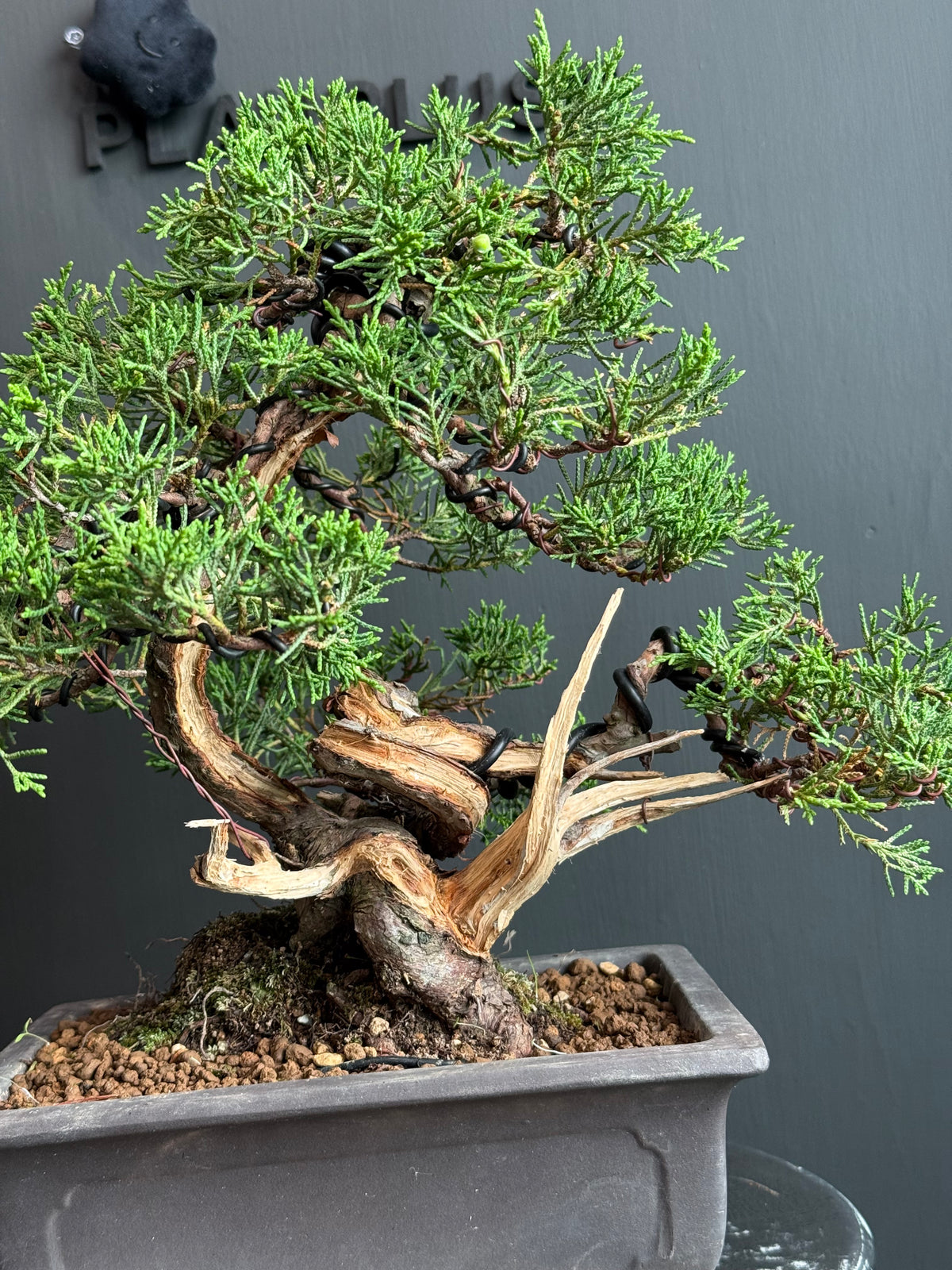
The bonsai pictured is the actual tree offered for sale. One of a kind.
Strong yet delicate branch lines reveal the traces of time in an Itoigawa Shimpaku.
The central trunk turns repeatedly, with pale wood projecting diagonally towards the upper right of the photograph. Foliage spreads to both sides, leaving space between lower branches and the upper crown. A substantial base anchors the expressive trunk lines.
For indoor placement, choose a bright position. Whether indoors, on a balcony or outdoors, provide ample light and good airflow. If natural sunlight is insufficient during longer-term indoor placement, supplement it with a suitable grow light.
Tree profile
A meaningful gift
Evergreen life · Longevity · Resilience
Evergreen throughout the year, Shimpaku evokes endurance, vitality and the passage of time in Japanese garden and bonsai culture. It makes a meaningful gift for a new home, business opening, promotion or anniversary.
The beauty of the tree
Shimpaku grows in several parts of Japan, with Itoigawa in Niigata Prefecture especially well known. Fine, dark green foliage and delicate branches contrast with a strong trunk, creating the character that attracts so many bonsai enthusiasts.
The appeal of Itoigawa Shimpaku lies in both its form and the marks left by time.
Foliage continues to change with the seasons and care, while deadwood and trunk lines develop over years. Each tree takes on its own individual character.
Bonsai details | Jin and shari
Jin
A dead branch preserved through natural weathering or bonsai techniques.
Shari
An area of deadwood on the trunk.
The pale deadwood contrasts with living bark and live veins, creating one of the characteristic expressions of Japanese juniper bonsai.
Care guide
☀️ Light
Provide ample light. In Hong Kong’s hottest weather, protect the tree from prolonged intense midday exposure.
💧 Watering
Water thoroughly as the soil surface begins to dry. Avoid persistent waterlogging and adjust the frequency to the season and growing conditions.
🌬️ Airflow
Keep air moving around the tree, especially during hot, humid weather. Avoid enclosed, stagnant conditions.
🌱 Placement
Choose a bright balcony, window or outdoor position. Supplement insufficient natural light with a suitable grow light.
From choosing a tree to everyday care, we are here to help.
Share a photo of your proposed location on WhatsApp and we can discuss light, airflow and care for your space.
Jin & Shari | The Art of Deadwood
Jin refers to a dead branch or branch tip, naturally weathered or carefully refined by bonsai techniques. Its pale, sculptural lines contrast with the living green foliage.
Shari is an exposed strip or area of deadwood on the trunk, alongside living bark and the vital live vein. Together they reveal the passage of time and the tree's continued growth.
Look at the interplay of deadwood, live veins, foliage and negative space. Not every Shimpaku has jin or shari; please refer to the actual photographs and video for this individual tree. Deadwood work and lime-sulphur treatment should be undertaken with care to avoid damaging living tissue.
Care Guide | shimpaku


Recommended for you
-
SUSTEE Japanese Soil Moisture Indicator | Watering Checker
Regular price From HK$42Regular price -
Japanese Itoigawa Shimpaku
H 28 cm · W 26 cm
VideoRegular price HK$4,300Regular price -
Japanese Itoigawa Shimpaku
H 30 cm · W 20 cm
VideoRegular price HK$4,500Regular price -
Japanese Itoigawa Shimpaku
H 28 cm · W 28 cm
VideoRegular price HK$4,500Regular price -
Japanese Itoigawa Shimpaku
H 36 cm · W 28 cm
VideoRegular price HK$4,800Regular price


